
By Vivika Vinod
I’m sure when you read this title you thought of skeletons and zombies. I bet none of you were even thinking of our prehistoric friends who left the planet a few tens of thousand years ago. What if someone told you that a few of them could be joining us soon, what would your reaction be? Most people would find it exciting, “imagine living amongst a mammoth!!”. But will these mammoths really be the same, after being extinct for a few hundreds of years? Or will these creatures disrupt the current ecosystem? Many skeptics say “Do wild giants have to become the next big problem!?” But let’s not become these skeptics until we understand the issue.
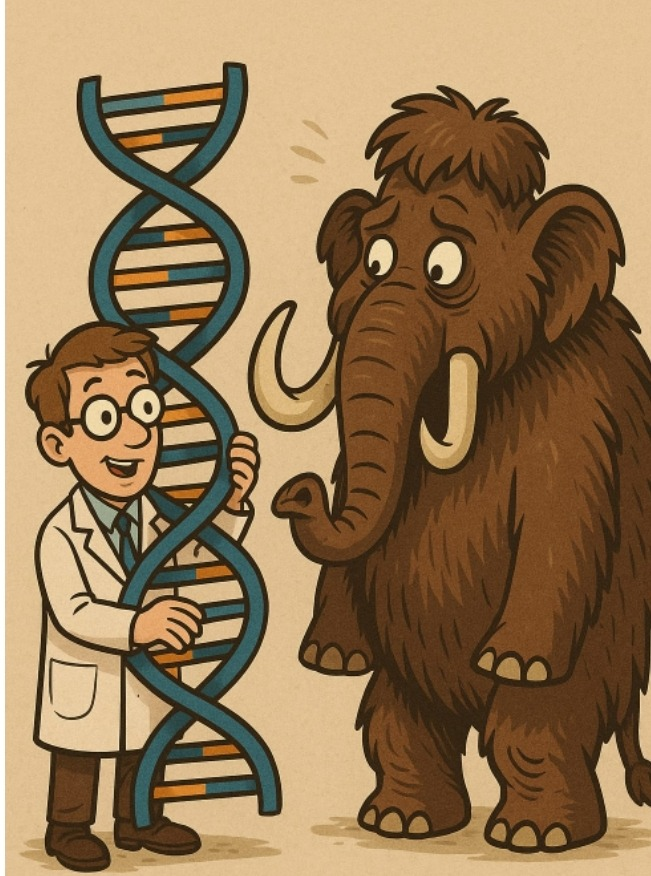
One of the creatures scientists are trying to bring back is our big furry elephant, the wooly mammoth. The wooly mammoth has been extinct for almost 10,000 years now. One of the main reasons why scientists wish to bring back the mammoth is to mitigate climate change. The mammoth’s habitation was a grassland that disappeared along with them, this in turn damaged the ecosystem at the time leaving long lasting effects on the environment. Although bringing back the wooly mammoth can have positive environmental impacts, what about the ethical dilemma?
From one aspect, bringing back mammoths could cause harm to the mammoth. Some of the issues could be rapid ageing and poor health which could eventually lead to a premature death. The process of bringing the mammoth to life poses enough complications as it is. Scientists will probably use a female elephant to carry the mammoth,risking the life of both the elephant and soon to be mammoth. There is also the ecological issue we must take into account. A resurrected mammoth would have to adjust to its new environment and social structure. It is also not clear if the mammoth will be able to survive the current arctic environment which has evolved over thousands of years.
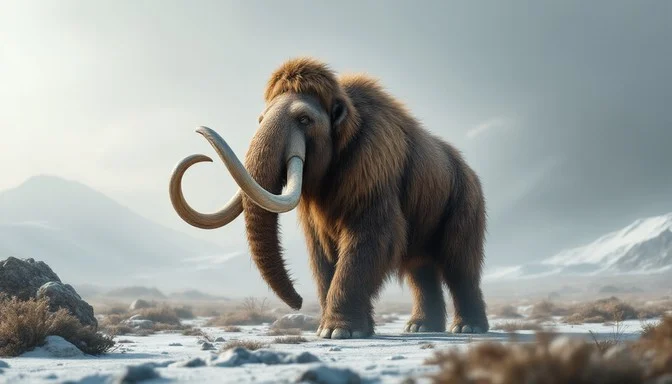
Another ethical problem raised is “should man control nature?”. Man is a part of nature but is it really our job to bring back creatures that went extinct naturally? If they were not strong enough to survive then, maybe we shouldn’t even consider bringing them back now. It is well known that the elephant and the mammoth have a shared ancestor. So if the mammoth came back, would it affect the elephants? These questions all circle around, if bringing the mammoths back is good for all of earth and its many creatures.
Up until this point the ethical issues and dilemmas are clear but, what about the scientific aspect? These mammoths are essentially a test on science. Scientists are pushing its boundaries to see how far they can go. What are the limits? Or are they limitless. To understand this let us first inquire into how close scientists are to reaching their goal and bringing back the mammoth. The process starts with extracting DNA from frozen mammoth remains. They then compare it to the genome of an elephant. Then, using CRISPR technology the mammoth genes are inserted into the DNA of the female elephant’s cells. The edited elephant cells are then used to create induced pluripotent stem cells. An egg from an Asian elephant is then modified to have its nucleus replaced with genetic material from these mammoth-edited stem cells. Finally the resulting embryo develops and is then inserted into a female elephant serving as the surrogate. This is the current process that scientists are working on.
In conclusion, resurrecting the wooly mammoths poses both solutions and potentially creates new problems. It is a nuanced and complicated topic that is hard to resolve to everyone’s satisfaction. There are many different opinions and perspectives. This article briefly summarizes the many opinions people have on waking the dead. I hope it can give you , the reader, a general idea of the issue so that you are able to formulate your own opinions on this ethical dilemma.