
By Xuanzhang “Steve” Zhu
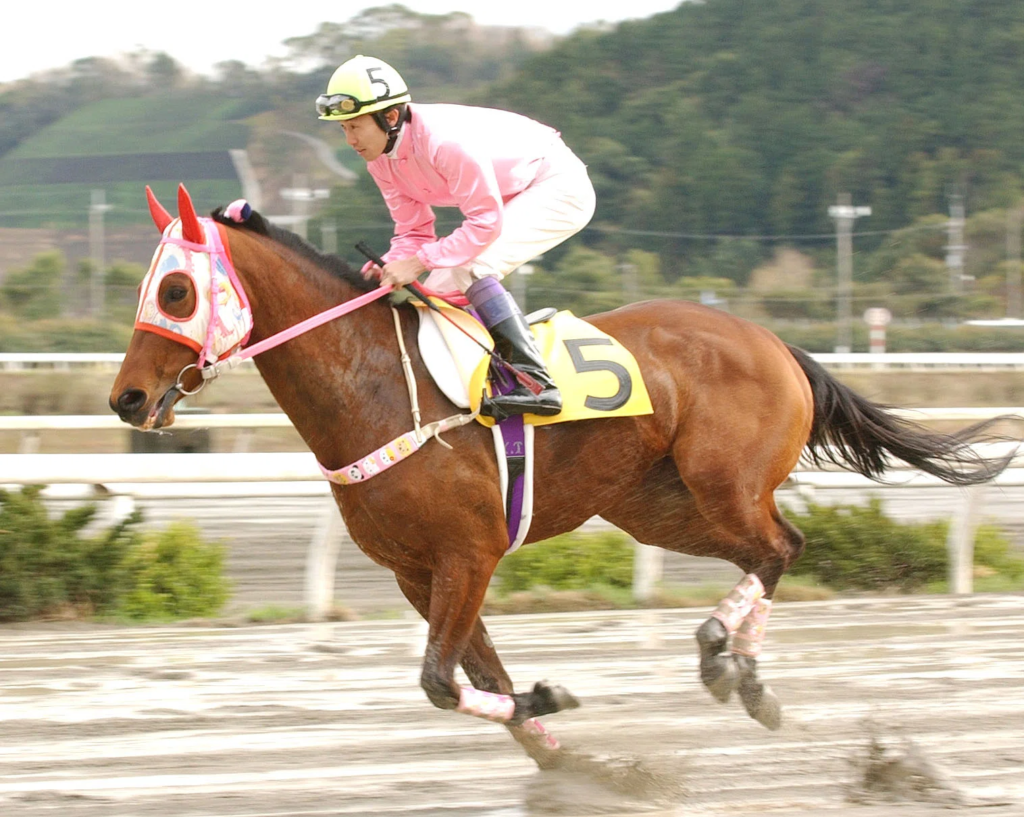
In the Japanese horsing industry, Haru Urara (ハルウララ) was a mediocre horse, ability-wise, to say the least. In her six-year career from 1998 to her last race in August of 2004, she collected losses like Thanos collecting infinity stones with a stunningly terrible record of 0 wins and 113 losses. In other words, while other horses had songs of victory played for them, the only thing they’d be playing for Urara are the credits.
Sired by Nippo Teio, a dominating mile-runner during his peak, triumphing in prestigious G1 races such as the Tenno Sho and Yasuda Kinen, Haru Urara was destined to succeed. However, she was unable to find a buyer at auction and was ultimately trained by her farm.
At her debut race in 1998, at the Kochi racetrack, Haru Urara placed fifth. While this may sound like a fine placing out of context, debut races typically do not include many horses, and this one in particular only had five; Haru Urara placed last.
Haru Urara was not off to a great start, and she would continue this trend for the rest of her racing career. This does not mean, however, that she is an unremarkable horse.
Many horse racing fans often wondered: Why was Haru Urara so weak?
An article in 2003 revealed that Haru Urara was scared of open spaces. She was so timid that she would not have won any races, even in peak form. On top of that, she was physically weak and was reportedly a light eater, traits that weren’t ideal on a racehorse.
The Kochi Racecourse, where Haru Urara would run, had incredibly cheap tickets, a sign of bankruptcy. Everyone knew that if things kept going on the trajectory they were pointed to, the racecourse would eventually close, and Haru Urara would have to find her purpose somewhere else.
The farm that owned her, Shinoda Farm, just happened to want her back as a riding horse. Urara’s trainer, however, understood that Urara’s fear of open spaces meant that she would most definitely find a way to die on a field. Haru Urara hence continued to race, not to win, but to live.
Thankfully, she kept running, unaware of the glistening future ahead of her.
In June 2003, after her 80th consecutive loss, media outlets in Japan reported on Haru Urara’s inability to win, and she became a renowned figure. She was soon dubbed 負け組の星 (makegumi no hoshi), or the “Shining Stars of Losers Everywhere”. People all over Japan commended her for her optimism, determination and unwavering pursuit of victory. Junichiro Koizumi, the Japanese Prime Minister, once said: “I’d like to see Haru Urara win, even just once. The horse is a good example of not giving up in the face of defeat”. This surge in popularity was later referred to as the ‘Haru Urara Boom’. News of her spread all over the world, being reported in America and Germany as well as many other places.
Tickets placed on Haru Urara’s victory were considered ‘o-mamori’, Japanese amulets that grant some form of luck or blessing. In Japanese, the phrase 当たらない (ataranai) means to ‘Lose a Bet’ but also ‘To Avoid Being Struck’, so people thought that betting on Haru Urara would prevent them on being hit.
At the peak of Urara’s popularity on March 22nd 2004, she was ridden by jockey Yutaka Take, who was as important to horse racing as One Piece was to anime. Though Urara lost epically, placing tenth in a race of eleven horses, the good news outweighed the bad news. People lined up for more than 5 hours to buy from the ‘Haru Urara Commemorative Ticket Booth’, betting a grand total of 121 million yen. While not even a smidge of the strong horses during her time, this was a particularly high number considering Urara’s track record of wins, which is nonexistent. In total, the racecourse earned 510 million yen in one day.
Thanks to Haru Urara, the Kochi Racecourse was saved.
Haru Urara’s popularity became so widespread that she received the honors that only the most popular and strongest cream of the crop, like Symboli Rudolf, T.M. Opera O, Gold Ship and the like get: Being branded into marketable merchandise.
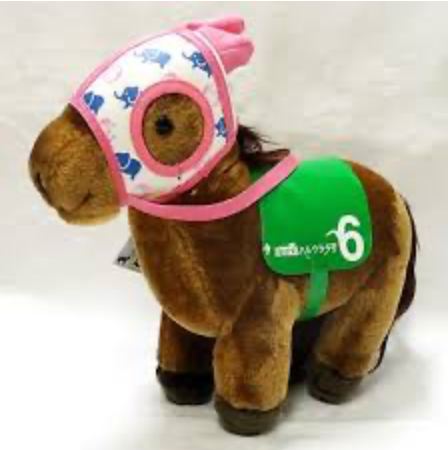
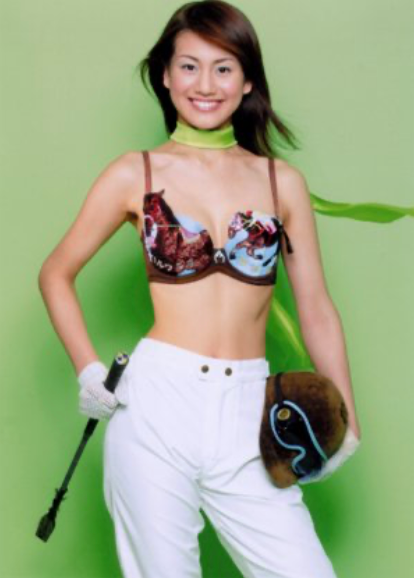
Haru Urara hit it big time, with T-shirts, stuffed toys, stickers, train tickets, rice, shochu (Japanese Alcoholic Beverage), hats, and even bras for some reason.
On September 9th of 2025, Haru Urara’s farmers announced that she had passed away from horse colic, a digestion illness common amongst horses.
This was devastating news, especially since Grass Wonder, another famous Japanese racehorse, also passed away one month ago on August 8th. The horseracing fandom was devastated, but Haru Urara was able to live 29 healthy years, with one Urara fan claiming, four days before her death, that she was ‘healthier than I am’, showing how Urara lived happily until the end.
One can only hope that there won’t be another tragedy on October 10th…
While Haru Urara is labelled as a loser by all media outlets in the world, she has won over our hearts with the resilience she showed in her trials and tribulations.