
By Akshara Sampath
Where can you find glittering Christmas lights twinkle beside the soft, warm glow of red lanterns? In Singapore, it is a familiar sight. Streets come alive with doors draped in Christmas wreaths, the rhythmic energy of dragon dances, children in Halloween costumes weaving past homes bright with Deepavali colours, and markets overflowing with festive treats from every culture imaginable. Here, holidays coexist; they overlap, mix and evolve seamlessly, creating a vibrant cultural tapestry that is unique. As celebrations travel across borders and into everyday life, an important question arises: what do these shared traditions reveal about our identity and the way we connect in a globalised world?
On this island, Eastern festivals such as Lunar New Year, Deepavali and Hari Raya Puasa continue to anchor many families to their cultural heritage. Passed down through generations, these celebrations emphasise values of respect, gratitude and togetherness. Whether it is reunion dinners during Lunar New Year, the symbolism of light during Deepavali, or the open-house spirit of Hari Raya Puasa, these transitions offer a sense of continuity in a rapidly paced modern society. They remind communities of their roots, even as modern life becomes increasingly influenced by global culture.
At the same time, Western holidays like Christmas, Halloween and Thanksgiving have also become woven into Singapore’s society. Celebrated widely across “The Red Dot”, these holidays reflect global trends shaped by media and popular culture. For many teenagers, they represent creativity, social connection and shared experiences with peers, adding new layers of festive fun. Christmas school performances and Halloween costume parties with trick-or-treating demonstrate how global celebrations have been adapted into local contexts.
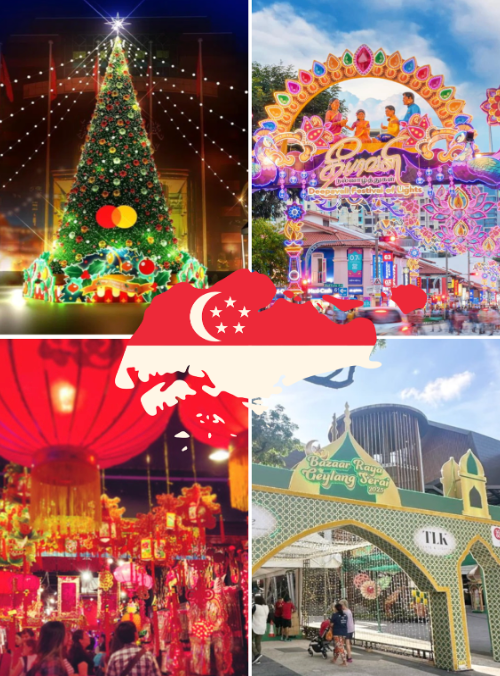
What truly sets Singapore apart is not the number of festivals celebrated, but how coherently they exist side by side. Neighbourhoods transform throughout the year as Little India glows with lights and colours during Deepavali, Orchard Road is covered with Christmas displays, Eunos and Geylang come alive for Hari Raya Puasa, and Chinatown fills with red lanterns and festive markets for Lunar New Year. Even within condominiums and housing estates, residents decorate common spaces and organise celebrations to bring different cultures together in shared spaces. This everyday exposure to multiple traditions shapes how Singaporeans understand identity. It is not something fixed, but something built collectively through diversity and experiences.
Beyond the festivals themselves, the celebrations transform the rhythm of neighbourhood life. Community centres, hawker centres and public parks become stages for storytelling, performances and shared meals. Residents come together to decorate streets, organise events, or simply exchange greetings. These everyday acts of participation make festivals more than a public display; they create bonds that turn urban spaces into togetherness. In a city often described as fast-paced and modern, these moments offer pause, connection and a sense of belonging.
This cultural intersection enables migrant and expatriate families to preserve their cultural traditions. For younger generations, it offers a way to understand their roots while growing up in a globalised world. These shared celebrations play a deeper role than simply marking dates on a calendar. Experiencing festivals from different cultures encourages empathy, curiosity and openness. It helps people understand that identity is not fixed, but shaped by heritage, environment and global influence. In an increasingly interconnected world, learning to appreciate multiple traditions becomes an essential life skill.
In Singapore, every celebration, whether inherited, adapted or borrowed, tells a story. Together, these festivals form more than moments of joy; they reflect how culture travels, transforms and brings people closer together. Singapore’s holiday calendar is packed, but in that lies its strength, identity and a quiet message to the world – “Unity in Diversity”