
By Shams Tlili
Introduction
“Freedom Writers” is a 2007 film recounting the story of American teacher Erin Gruwell. Receiving majorly favourable reviews and praised for being an inspirational story, Erin Gruwell, portrayed by Hillary Swank, has recently accepted a teaching position at an inner-city high school. She is depicted as an incredibly ethical and noble human whose sole goal is to aid the troubled young minds that she will be teaching. While initially met with resistance from the students, who claim she will never comprehend the horrors they experience in their daily lives, as the film progresses, they begin to confide in and learn from her. She encourages them to fulfil their potential by writing their shared experiences down. While the theatrical release poster states that it is “Their story, their words”, the focus of the film is entirely on her. She is the student’s saviour, and without her, they are lost, with the film depicting them as overly dependent on her. The White Saviour trope has long dominated the screens of viewers worldwide. From stories widely regarded as classics of American literature to crowd-pleasing Hollywood films recounting the stories of White characters who put people of colour out of their misery. Throughout history, this trope has persistently appeared in the media, disguised as anti-racist endeavours but culminating in portraying minority communities as weak and helpless without their White rescuer.
History of the trope
The White saviour complex is rooted in colonisation and can be traced back to the period of European imperialism, operating on the idea that White Europeans were sophisticated and civilised, while indigenous communities were savage and barbaric by nature. European powers routinely used this to justify their control over other populations through a presumed moral obligation to educate and civilise them. A white saviour is often regarded as a White character that aids and inherently ‘saves’ a group of people of colour in their struggles. It is implied that the White saviour is the person allowing them to move forward in life. They are often portrayed as optimistic, strong-willed and non-traditional, rejecting the racist and prejudiced beliefs of their community. Frequently appearing in period pieces, they are portrayed as being ahead of their time and brave despite risking being ostracised by the members of their community to help a person of colour. They are routinely depicted as ‘leading’ people of colour to victory against White antagonists. These films usually portray the White characters as the main focus, and centre on their benevolent actions. Additionally, White saviours are overwhelmingly presented in feel-good movies with happy endings, as a way to comfort audiences with a false sense that the nuanced and complex problem of racism is essentially ‘solved’ by the end of a 2-hour movie. This reduces racism to an easy problem capable of being solved on an individual scale. While these films attempt to preach unity and equality, and are often recognised with praise and awards, they frequently result in foregrounding the stories and experiences of White characters, effectively sidelining people of colour. While the idea of a White saviour is not necessarily villainous because their intentions are good, it can also be construed as condescending and narcissistic and done only to enhance one’s self-satisfaction. Voluntourism contributes significantly to the idea and concept of the White saviour. Each year, thousands of young students travel to developing nations to provide humanitarian work in hopes of ‘saving’ native populations. While they may have good intentions, the practice has been criticised as condescending, and for certain populations, a reminder of colonial attitudes, reinforcing the idea that indigenous populations cannot thrive without adhering to Western concepts of civilisation.
Popularity of the trope and examples
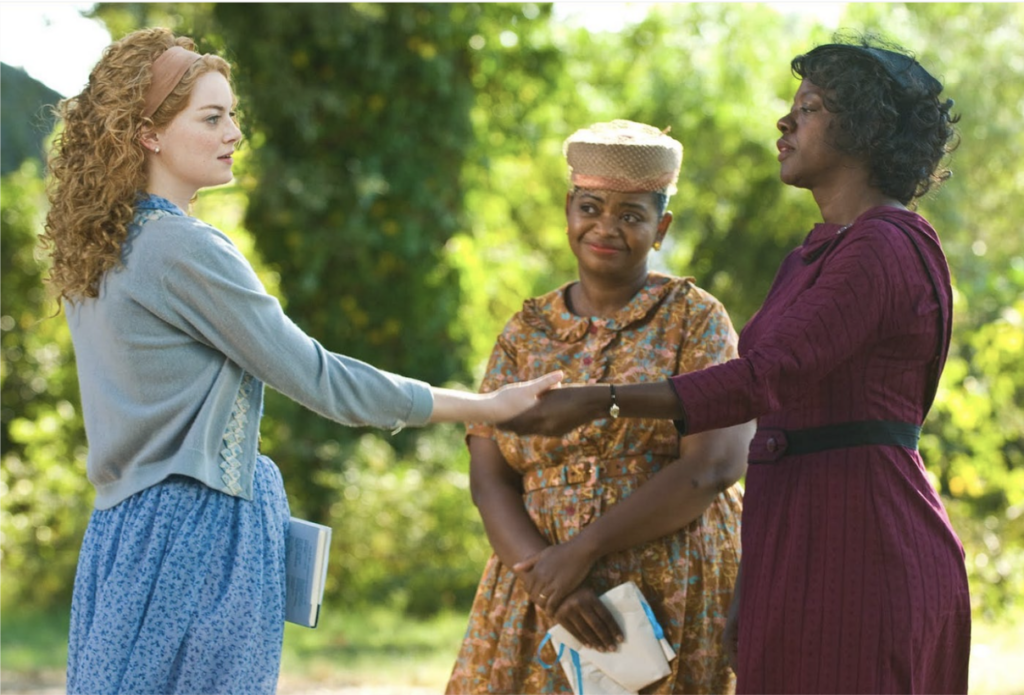
The popularity of this trope began to skyrocket during the 1950s and 60s, in the wake of the American Civil Rights Movement. While the United States was facing major tensions in the country as Black Americans rallied in the streets, echoing calls for change, the mainstream films of the era mainly focused on the feelings of White men regarding these tensions. This ties back to the movie industry’s prevailing assumptions that White audiences were unable to relate to stories concerning race unless told through the perspective of a White character. In the film adaptation of Harper Lee’s “To Kill a Mockingbird” (1962), White American lawyer Atticus Finch is appointed to defend Tom Robinson, a Black American man accused of raping a young White woman. Facing significant criticism as well as disapproval for defending Robison from the members of his community, Finch believes it is his duty to do so. While he does not succeed in proving Robinson’s innocence, by the end of the film, he is hailed as a hero in the Black community and a role model to his young daughter. While the film’s ideas and writing were unique and notable for the time, staples of American film and literature, such as “To Kill a Mockingbird”, aided in establishing and furthering the norm of stories about Black history and experiences being told through the lens of an ‘upstanding’ White person. Additionally, furthering the idea that people of colour are unable to overcome their struggles unless helped and supported by a White person. The trope’s popularity prevailed throughout the 1980s and 90s, while continuing to foreground the experiences of White characters in stories dealing with race. Movies such as “A Time To Kill”, “Dances with Wolves” and “Amistad” furthered the norm that people of colour need White people to get through their struggles and understand the prejudice they face. The 2011 film ‘The Help’ recounts the story of Black American maids Abilieen Clark and Minerva Jackson working in Mississippi who constantly face prejudice from their employers. When White journalist Eugenia “Skeeter” Phelan finds out that her beloved childhood nanny has been fired by her mother, she decides to write an article from the point of view of these Black maids to expose racism in her community. This implies that Skeeter is the one who encouraged and persuaded them to share their stories, completely disregarding the fact that, in reality, Black people were eager to share their stories and experiences. The film illustrates that without Skeeter’s bravery, the maids never would have even encountered the struggle for equality and understood the prejudice they encountered on a day-to-day basis. Films like ‘The Help’ further the norm of centring on White characters’ struggles and experiences. While White Characters are given love stories and complex character development, characters of colour are reduced to side-characters who only serve to further the self-satisfaction and growth of the White character.
Continuation of examples
Perhaps the most clear depiction of a White saviour in films is the idea that a White character is the only person capable and willing to solve the issues people of colour are experiencing. White saviours are routinely portrayed as risk takers, who are brave enough to be ostracised by the members of their community to ‘save’ a person of colour. In fact, films often elevate the White character’s encounters with racism almost to the point where it is equated with actually being victimised by racism. In ‘Lawrence of Arabia’, the focus of the film is the White main character, in a story about the Arab people’s struggle for independence. Additionally, the film portrays the White main character as the sole reason the Arab community gained their freedom. In ‘Indiana Jones and the Temple of Doom’, it is Indiana Jones who manages to save a group of missing children and retrieve a sacred stone in a village in India. In Clint Eastwood’s film ‘Gran Torino’ in which Eastwood stars as the main character, it forgives his character’s unapologetic and blatant racism towards a neighbouring Asian family and passes it off as a “lovable personality quirk”, and it is, in fact, he who saves them from being attacked by a gang. While many White saviour films are based on true stories, directors often change or alter the storyline to frame a heroic arc around a White character. In the 2016 movie ‘Hidden Figures’ about NASA employees Katherine Johnson, Mary Jackson and Dorothy Vaughan, the director invents a scene where Katherine’s fictional boss, a White man, tears down a “Coloureds only” bathroom sign. Director Theodore Melfi admitted to having made up the scene, declaring, “There needs to be White people doing the right thing”. His statement reveals that the prevailing assumption of movie studios, that White audiences can only relate to stories with White characters, is still very present today. Many people on whom White saviour films are based even criticise their oversimplification of events. Michael Oher, an American football player and the person on whom the film ‘The Blind Side’ is based, gave a negative review of the film and criticised it for spreading false information. Abilene Cooper, a Black woman who worked for the author of the book “The Help”, is suing the author for using and distorting her likeness, in a way she describes as “humiliating”, without her consent. The family of Black American musician Don Shirley, about whom the movie Green Book is based, criticised the film for the inaccurate portrayal of Shirley himself and the false portrayal of his relationship with his White driver. The film goes to the point where it even suggests that Shirley is estranged from his Black culture, and requires the help of his White driver to reconnect with his Blackness. The film reduces Shirley’s life to supporting material for a narrative about a racist driver, when in reality, the story of this character would have made for a much more engaging and exceptional movie on its own.
Racism as a systemic issue
A central issue with the White saviour trope is that while racism is a systemic issue, these movies only explore it on an individual scale, reducing racism to a simple issue that can be solved by the end of a 2-hour film. In the film ‘The Help’, instead of exploring the nuances of the racism the Black maids experienced at the time, racism is simply portrayed as prejudiced remarks exchanged between White people. While White saviour films can discuss compelling and inspiring stories, exploring racism as an individual issue can leave audiences without concrete ideas and messages of systemic change and instead vague messages of unity and kindness, along with the idea that racism can be ‘solved’ if an individual simply cares enough. Additionally, as White saviour films are often set in the past, this allows viewers to comfortably look back on the progress we have made as a society, while also granting White audiences the privilege of believing that they are not implicated in the ongoing racism of the society they live in. Nigerian-American writer Teju Cole, who first coined the term White Saviour Industrial Complex in 2012, states White saviourism as “a big, emotional moment that validates privilege”, tying back to the myth of the White saviour, that by simply showing care and compassion to a person of colour, White people can absolve themselves of their privilege, while in turn, being rewarded with personal fulfillment and self-satisfaction. White saviour films routinely end with a heartwarming resolution and interracial reconciliation, providing the audience with hope that progress is possible and on the way, because of what these individuals have accomplished. In contrast, films made by Black individuals and filmmakers of colour that discuss racism provide a very different emotional takeaway for the audience. Rather than being left with a comfortable outlook on the issue, viewers are left challenged, confused and confronted. Kevin Richardson, one of the five young Black and Latino teenagers wrongfully convicted of the assault of Trisha Meili, a jogger in New York City’s Central Park, discusses the Netflix series “When They See Us” that is based on their story, saying, “Watching this is painful, but it’s necessary”. This ties back to the common reality that comfortable films often receive praise and awards, while complicated ones do not. Perhaps one of the biggest issues with the White Saviour trope is its focus on the White characters while detracting from people of colour and their firsthand experience of racism. It values the voices of White filmmakers and characters in a narrative where people of colour’s voices must be heard most of all.
Films rooted in the perspectives of people of colour
Movies and series made by Black filmmakers and filmmakers of colour, on the other hand, foreground the real experiences and stories of people of colour. They avoid making the audience comfortable and rather encourage discomfort and self-reflection. When Spike Lee’s ‘Blackkklansman’ ends with footage from the 2017 Charlottesville White supremacist rally, Lee reminds audiences that racism is very much an ongoing systemic issue. The 2018 film ‘The Hate U Give’ furthers this message, with the movie recounting the story of a young Black girl’s best friend being shot and killed before her eyes by a White police officer. Additionally, the film’s opening scene is a powerful one, depicting a father telling his 3 young children what they need to do and what they will see him doing if they are ever stopped by the police. It is an incredibly powerful and captivating scene that accurately portrays and is rooted in the true firsthand experiences of Black people throughout America. These films allow us to be confronted with the harsh reality that racism is not just an issue of the past, but rather an ongoing systemic problem that concerns everyone. Rather than portraying White people as saviours, these films often portray them as antagonists or put them on the sidelines. In Spike Lee’s ‘Malcom X’ , White people are portrayed as villains, distractions or simply irrelevant. When a young White girl in the film asks Malcom X, played by Denzel Washington, what White people can do to support and further their fight, he replies “Nothing”. In the 2017 film ‘Get Out’, the White characters are portrayed as controlling and psychopathic villains. By portraying White people in this way, Black and filmmakers of colour are centring and shining a light on the stories and experiences of people of colour, and making sure their voices are heard. While White Saviour films often frame the divide between ‘racist’ and ‘not racist’, in today’s society, we must not aspire to be ‘not racist’ but rather anti-racist. This means seeking out movies and series that challenge us, present us with concrete ideas for change and allow us to confront our own bias.
Conclusion
While the White saviour trope has appeared numerous times on the screens of audiences worldwide and can make for entertaining and wholesome films, in reality, it detracts from stories grounded in the perspectives of people of colour and their firsthand experiences of racism. To truly believe in fighting against racism is to actively seek out stories and narratives that value the voices of people of colour and present an accurate portrayal of racism in our society. By seeking out these stories, we can begin to deconstruct the White saviour trope and truly move towards a society of equality and freedom.