
By Diya Harish
Holidays are often defined as timeless occasions which are rooted in culture, faith and family. Yet many of the traditions that we treat as ancient and universal were shaped far more by corporations than by history. Today, Christmas is one of the most celebrated holidays in the world, and is especially influential among young children, many of whom grew up believing in the tale of Santa Claus. Yet the Santa we recognise today was not shaped by folklore alone, but by corporate advertising.
The figure of Santa Claus had deep roots in European folklore and religious tradition, long before he became the universally recognised symbol of a jolly man who delivers presents. Santa originates from Saint Nicholas, a 4th-century bishop from Myra, who was famous for his generosity towards children and the poor. Over centuries, this figure has evolved differently across regions, such as in the Netherlands, where he is known as Sinterklaas, who arrives by a steamboat from Spain and delivers gifts on December 6th. The name “Santa Claus” itself originates from the Netherlands. When Dutch settlers brought their tradition to North America in the 17th century, English-speaking communities gradually changed the name through pronunciation and usage, eventually leading to “Santa Claus.” By the 19th century, Saint Nicholas was in literary and artistic depictions in the United States, including Clement Clarke Moore’s 1823 poem “A Visit from St. Nicholas” and Thomas Nast’s art, which began shaping a plump, cheerful man who travelled in a sleigh and entered homes through the chimney.
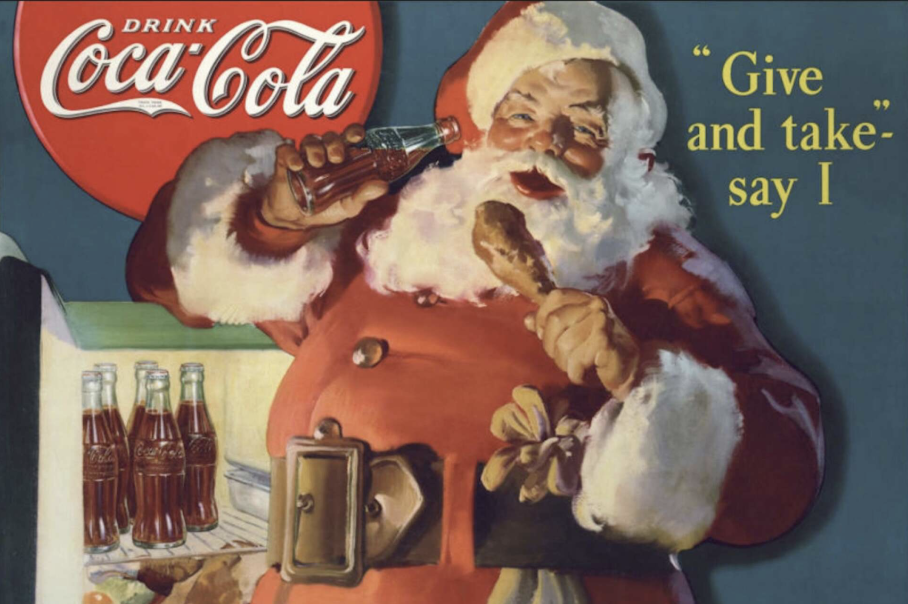
Another popular belief is that Santa’s red suit, jolly personality, and iconic look have existed for centuries. In reality, early descriptions of Santa varied: he appeared in blue, green, brown, and even tan robes. It was not until Coca-Cola launched its 1930s holiday advertising campaigns that Santa, as we know him today, became standardised. Illustrator Haddon Sundblom created a warm, friendly red-suited figure that perfectly aligned with the company’s branding. The campaign was so successful that its version of Santa overshadowed earlier cultural portrayals. A supposedly ancient symbol of Christmas cheer is, in truth, the product of one of the most influential marketing strategies in advertising history.
This transformation has raised a larger question about the holidays we celebrate today: how many of our “traditions” are the result of genuine cultural heritage, and how many are the by-products of well-crafted marketing? Santa’s evolution is not an isolated case. Even beloved figures that children adore, such as Rudolph the red-nosed reindeer was merely just promotional characters for Montgomery Ward in the late 1930’s. The colours that we associate with Christmas, the surge of seasonal shopping, and even the idea of the holiday as a primarily gift-centred event have been shaped, if not outright defined, by commercial interests over the last century. Companies learned early on that selling nostalgia, sentiment, and tradition was far more effective than simply selling the products.
Yet despite this corporate influence, the modern version of Santa persists not only because it was marketed well, but because it resonated. The cheerful, approachable figure which was created by Coca-Cola appealed to families seeking warmth during the economic uncertainties of the 1930s, and it continues to appeal because it symbolises generosity, community, and celebration. Cultural symbols endure when they reflect what people want to feel, even if they originate in unexpected places.
Understanding this history does not diminish the holiday spirit; it instead encourages a more thoughtful appreciation of the tradition we embrace. The line between authentic custom and commercial invention may be thin, but it does not make the rituals any less meaningful. What it does remind us is that culture is rarely fixed, as it often evolves, shaped by forces that we ourselves overlook. In the case of Christmas, the Santa we know today may have been born from advertising, but the joy he represents has long since outgrown the campaign that created him.