
By Alankrita Singh
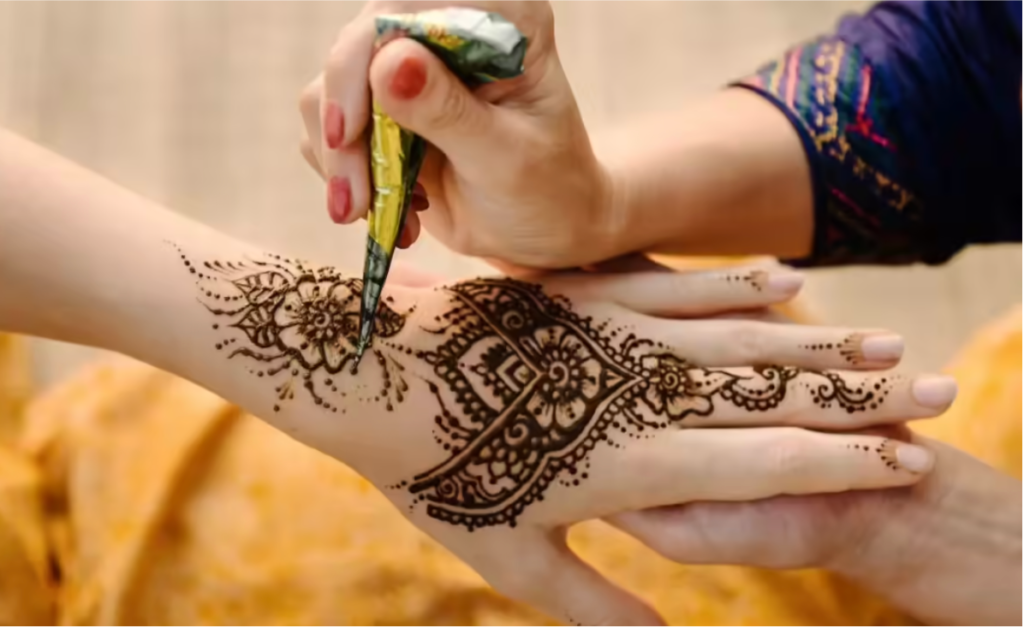
An art form, a culture, an expression of identity, just one plant incorporates all these beautiful meanings. Just one brown paste provides jobs, joy, and enriches culture. Behold henna, known by people all around the world, with a history dating back thousands of years. But as henna gains more widespread recognition, will its cultural heritage slowly wither under the demands of future generations?
Also known as mehendi, this art form has gained worldwide popularity not only as a cosmetic product but also as a natural alternative to tattoos. However, it hasn’t always been used for looks. Behind the beautiful designs and creativity lies an enriching and surprisingly diverse history just waiting to be uncovered.
Although we often associate henna to have originated from India, it has origins from across the globe! From countries in North Africa and the Middle East, (Egypt, Morocco, the UAE, and Iraq) to countries in South Asia, (Pakistan and Bangladesh) mehendi has always been an integral part of places and traditions around the world. Just as different countries all have their unique beliefs and cultures, they all use henna in different ways.
In India and Pakistan, henna was (and still is) used in Ayurveda and Unani medicine for healing wounds, such as burns and scrapes and treating various skin infections, such as athlete’s foot and ringworm. You might be asking, ‘how does henna help in medicine?’ Well, the medical properties of henna come from a chemical known as Lawsone, which fights bacteria, stops swelling, and prevents cell damage.
Traditionally, in North African and Middle Eastern countries, henna was believed to ward off the ‘evil eye’, a curse thought to come from envious gazes. Other countries believed putting on henna could carry luck and strength in war, provide prosperity and joy, and be used to purify the body before important occasions, such as weddings and rites of passage.
In hotter areas of the globe, people used to put henna on the soles of their feet and the palms of their hands. They did so because as henna dries, it draws heat out from the skin, which makes the body cooler. This helped them to manage body temperature in the desert and prevent heatstrokes.
Henna was also used in the beauty industry as a dye for various things, such as clothes, textiles, hair, and nails, and as a way to get a temporary tattoo, all without any damage done to the body. While applying henna to the hands and legs of oneself, a finger or a twig was used, making it hard to create detailed henna.
This challenge is what resulted in the evolution of henna application. By replacing the use of fingers and twigs to make a design with mehendi cones, making henna got easier. The shape of the cone made hand control easier, and the pointed tip made making detailed designs a smoother process. This opened up a whole door of possibilities for designs, allowing more creativity and opportunity to express oneself with henna.
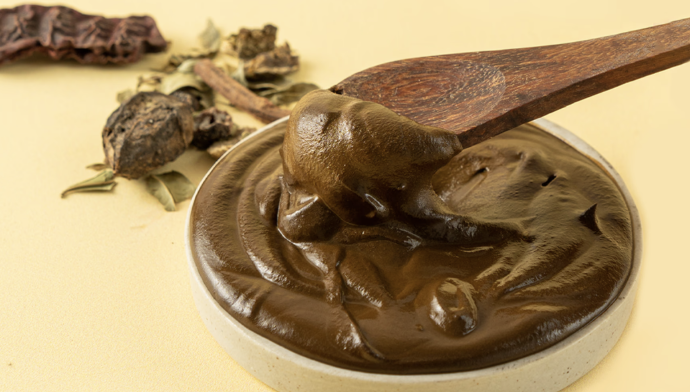
However, the way to put on mehendi wasn’t the only thing that evolved. Henna itself has evolved significantly, especially in the process by which it is made and applied. In the past, mehendi production was purely a natural process. Leaves from a henna shrub were collected and then dried in the sun, crushed into a fine powder to ensure a smooth texture, and then mixed with liquids such as water, lemon juice, and essential oils. People sometimes also added extra ingredients such as coffee or tea to enhance the smell. Then the paste was applied through the use of fingers or twigs to create beautiful designs.
As time passed, the traditional way of making henna was replaced by modern techniques. An example is black henna. To make henna have a more vibrant color, and to imprint the color on the hand faster, henna was mixed with many toxic ingredients, such as PPD (para-phenylenediamine), ammonia, and metallic salts. While this lets the henna dry faster, it also often leads to patchy designs that disappear after a few days, unlike natural henna, which takes longer to dry but makes a beautiful color no chemical can replace.
Now, the henna being produced can also be harmful for some skin types and cause rashes. However, as people have become more allergic to the chemicalized henna products, some brands are taking action to bring back the traditional mehendi. These brands are not just providing organic Henna, they are also mixing it with natural indigo color to make organic hair dye. These organic products are safer to use while keeping the beauty factor alive.
Overall, the unique, traditional art form known as henna not only has deep cultural ties with countries, but also a rich history. As time goes on, the authentic beauty of henna is slowly evolving into more commercial and money-based practices, creating a rift between the conservation of tradition and the demands of future generations.